

Last month, we looked at what Q1 might be telling you about your sales team – from pipeline quality and conversion to where attention may be needed in Q2. As we move further into October, another question becomes increasingly important: How effectively are genuine sales opportunities moving through your pipeline? B2B sales cycles vary considerably. Some opportunities move quickly. Others legitimately take months as requirements are developed, stakeholders become involved and commercial decisions are made. The objective isn't to rush that process. It is to make the sales cycle as long as necessary – but no longer than necessary. With the end of the calendar year approaching, there is still meaningful selling time available. But unnecessary delays consume time, make forecasting more difficult and tie up sales, technical and management resources. So where should business and sales leaders look to reduce unnecessary delays, build commitment and keep opportunities moving? Here are six areas worth examining. 1. Qualify Harder and EarlierOne of the simplest ways to shorten the average sales cycle is to stop spending time on opportunities unlikely to progress. An initial enquiry, productive meeting or request for a proposal does not automatically represent a qualified opportunity. Before committing significant resources, establish whether there is a genuine business requirement, reason to act and realistic pathway towards a decision. Ask:
Good qualification isn't about finding reasons to walk away. It is about focusing time and resources where they are most likely to produce a return. And qualification shouldn't happen only once. Circumstances change. Sometimes the fastest way to shorten a sales cycle is to recognise when an opportunity is no longer worth pursuing. 2. Understand What Is Driving the DecisionCustomers rarely buy simply because a salesperson has presented a good product, service or proposal. Something has to make change worthwhile. That might be reducing costs, improving productivity, meeting a deadline, managing risk, increasing capacity or solving a technical problem. This means going beyond What does the customer need? and exploring Why does it matter? What is the impact of the current situation? What would a successful outcome look like? And what happens if the customer maintains the status quo? Without a compelling reason to act, even an interested customer can postpone a decision. Understanding the requirement more deeply helps both sides determine whether there is sufficient value in moving forward. 3. Get the Right People Involved EarlierComplex B2B decisions rarely involve only one person. Your primary contact may support your recommendation, but others may influence the operational, technical, commercial or financial decision. If those stakeholders become involved late, new questions emerge, requirements can change and the sales cycle can effectively start again. Early in an opportunity, explore how the decision will be made and who needs to be involved. That doesn't mean demanding access to every senior decision-maker. It means understanding the wider buying group and helping your contact navigate the process. Strong customer relationships matter here. Trust enables more open conversations about how decisions are made, what concerns exist internally and who else needs confidence before the opportunity can progress. 4. Make the Value and Evidence ClearA proposal can meet every technical requirement and still fail to create a decision. In complex B2B environments, technical expertise, specifications and capability are important – but may not be enough. Customers also need confidence. What business outcome will this create? What evidence supports the recommendation? What risks are reduced? And why should the customer act rather than maintain the status quo? The easier it is for your contact to communicate the commercial value internally, the easier it becomes for others to support it. Case studies, examples, demonstrations, data and proof points can help reduce uncertainty. The objective isn't more information. It is the right evidence at the right time to make the next decision easier. 5. Agree the Decision Process and the Next CommitmentThere is an important difference between sales activity and sales progress. Sending a proposal, following up or updating the CRM are all activities. None necessarily means the opportunity has moved closer to a decision. A better question is: What has the customer committed to doing next? They might review the proposal with another stakeholder, provide information, confirm budget, arrange a site meeting or meet again on an agreed date. Each represents genuine movement. Understand the customer's decision process rather than simply waiting for a decision. Who needs to approve it? What information do they require? What needs to happen internally? What could prevent the decision? Where possible, agree what happens after the proposal is received and when both sides will reconnect. The aim isn't to manufacture urgency. It is to replace ambiguity with clarity and build commitment progressively. 6. Follow Up With PurposeFew B2B opportunities progress without follow-up. But there is a difference between maintaining momentum and repeatedly asking: “Just checking whether you've had a chance to look at the proposal?” Effective follow-up should have a purpose – answering a question, providing evidence, clarifying the proposal, involving another stakeholder or confirming an agreed action. Ideally, the next step is established before the previous conversation ends. Rather than “I'll give you a call next week,” both parties understand what happens next, who is responsible and when they will reconnect. Not every opportunity will – or should – conclude before the summer break. But those that don't can still finish the year with clarity around what happens next. Shorter Doesn't Mean RushedThere will always be B2B opportunities that take time. Large purchases, complex solutions and strategic decisions deserve appropriate consideration. Artificially accelerating them can damage trust rather than improve results. The opportunity is to identify the unnecessary time and friction within the sales cycle. At Touchstone, our Q-RED™ Sales System provides a simple framework for that progression: Q – Qualify: Are we pursuing a genuine opportunity? R – Requirements + Rapport: Have we built the trust to uncover what really matters? E – Evidence + Enthusiasm: Have we created sufficient value, confidence and belief? D – Decision: Is there clarity about how the customer will make a decision and what happens next? Q-RED isn't designed to rush customers. It helps identify where momentum may be slowing and what needs attention to keep an opportunity moving. Key Takeaway Sales activity isn't necessarily sales progress. Customer commitment is. Shortening the sales cycle isn't about rushing the customer. It is about removing unnecessary friction, creating clarity and keeping genuine opportunities moving. Final ThoughtsWith the end of 2026 approaching, there is still meaningful selling time available. Some opportunities will close before the summer break. Others won't – and shouldn't be forced to. Qualify – and keep qualifying as circumstances change. Understand what is driving the decision. Involve the right people. Make the value clear. Establish mutual commitments. And make every follow-up purposeful. Shortening a B2B sales cycle isn't about pushing customers to buy faster. It is about removing unnecessary friction and helping good opportunities move towards a decision. Make the sales cycle as long as necessary – but no longer than necessary. You can learn more about the Q-RED™ Sales System, explore our system-aligned sales training & live-deal sales coaching, or complete the free Sales Health Check to identify practical opportunities to strengthen your sales approach. Structured Sales. Human Delivery. Stay Connected Monthly Sales InsightsReceive one practical sales insight each month to help your B2B team strengthen sales execution, improve pipeline quality and build forecast confidence. One email each month. Unsubscribe anytime.
0 Comments

5 Questions to Ask Before Q2September marks the final month of Q1 for most Australian businesses operating on a July-to-June financial year. By now, the sales plans made at the beginning of FY27 have had nearly three months to meet the reality of customers, opportunities and sales conversations. Some opportunities will have progressed as expected. Others may have moved more slowly, changed direction or stalled. That makes the end of Q1 a useful time to look beyond the headline sales numbers. Not simply: Did we hit target? But: What is Q1 telling us about how our sales team is actually selling? Revenue is important, but it is a lagging indicator. Activity is much easier to see. Calls are made. Meetings are held. Proposals are sent. Follow-up emails go out. But a busy sales team does not necessarily mean a progressing pipeline. Here are five diagnostic questions B2B sales leaders can use to look beyond the activity and identify priorities for Q2. 1. Is Your Pipeline Genuinely Stronger – or Simply Bigger?A large pipeline can create a reassuring picture. But pipeline size and pipeline health are not the same thing. Opportunities can remain in a CRM long after customer priorities have changed. Expected close dates move. Early enquiries can become treated as qualified opportunities without anyone revisiting whether they still belong there. The end of Q1 is a good time to challenge the assumptions behind the numbers. Ask:
A smaller pipeline containing well-qualified opportunities is often more valuable than a larger pipeline filled with possibilities. Qualification should also continue throughout the sales process. Circumstances, priorities, budgets and people change. Regularly revisiting qualification helps the team focus on the opportunities with genuine potential. 2. Are You Securing Mutual Commitments – or Just “Checking In”?One of the clearest indicators of pipeline health is what happens between sales conversations. Look at the opportunities expected to progress during Q1. How many have a clear next step involving commitment from both the salesperson and the customer? There is an important difference between activity and progress. “I'll follow up next week” is activity. “The customer will review the commercial proposal with Operations on Thursday and we'll meet again Friday” is progress. Calls, meetings, proposals and follow-ups may all be necessary, but they do not automatically mean the customer is moving closer to a decision. Genuine progress often involves customer commitment – providing information, introducing another stakeholder, reviewing a proposal, testing a solution or agreeing a defined next step. Rather than only asking: “What did we do?” also ask: “What has the customer agreed to do next?” The answer can tell you whether activity is translating into progress. 3. Which Opportunities Stalled During Q1 – and What Do They Have in Common?Every sales team has opportunities that take longer than expected. Customers have competing priorities. Budgets change. Projects move. Internal decisions take time. The useful question is whether several stalled opportunities reveal a recurring pattern. Take a handful of Q1 opportunities that slowed down and compare them.
Last month, we explored how helping non-technical decision-makers understand commercial value can influence complex B2B opportunities. That matters because today's B2B buyer may need to sell your solution internally before they can buy it externally. If several opportunities are losing momentum at a similar point, look for the pattern. Perhaps requirements are not being explored deeply enough. Evidence may be too generic. Important stakeholders may be entering too late. Or the next step may lack clarity. Recognising those patterns gives managers something practical to address rather than treating every stalled deal as an isolated problem. 4. Do Your 1:1s Review the Numbers – or Improve Performance?Sales managers need visibility. Pipeline stages, expected close dates, forecasts and CRM accuracy all matter. But reviewing the numbers and developing the salesperson are not the same activity. A pipeline review might ask: “When will this close?” “Has the proposal gone out?” “Have you followed them up?” A coaching conversation can go further:
These questions turn live opportunities into learning opportunities. This is where live-deal sales coaching can be particularly valuable – helping salespeople think more critically about real opportunities while they are still active. Over time, those conversations can build stronger judgement, better questioning and greater sales capability. 5. Does Your Team Have a Shared Language for How You Sell?Ask three salespeople how they qualify an opportunity and you may receive three different answers. Every salesperson should retain their own personality and communication style. But some consistency in how the team thinks about an opportunity can make selling, coaching and pipeline management much easier. At Touchstone, we use the Q-RED™ Sales System to provide that shared language: Q – Qualify: Are we prioritising the right opportunities? R – Requirements + Rapport: Do we understand what really matters to the customer and have we built the trust needed to uncover it? E – Evidence + Enthusiasm: Have we demonstrated value with relevant evidence and the conviction that inspires belief? D – Decision: Have we created enough clarity and momentum to help the opportunity move forward? The value of a framework is not that every customer conversation becomes identical. It gives the team a consistent way to think about what needs to happen – while allowing salespeople to sell in a natural, human way. From Q1 Results to Q2 ImprovementQuarter-end reviews naturally focus on results. Which targets were achieved? Which deals closed? Where did the forecast finish? Those questions matter. But the greater value may come from understanding why those results occurred – and what they suggest should happen next. Weak qualification can become a Q2 pipeline priority. Limited customer commitments can prompt a greater focus on mutual next steps. Recurring patterns across stalled deals can become coaching priorities. And if the team lacks a consistent approach, a shared framework can provide greater structure without removing the human element from selling. This is where system-aligned sales training and live-deal sales coaching can work particularly well together. Training creates the shared framework and skills. Coaching helps salespeople apply them to real opportunities. Key Takeaway A healthy sales quarter is not measured only by what closed. It should also leave you with a clearer pipeline, stronger customer commitments and a better understanding of what your team needs to do next. Final ThoughtsThe end of Q1 is a useful diagnostic point. Three months of customer conversations, opportunities, wins, losses and stalled deals provide valuable evidence about how your sales team is operating. Look beyond activity to progress. Look beyond pipeline size to pipeline quality. And look beyond the final number to the behaviours and customer commitments behind it. The objective is not necessarily to ask the team to do more. It is to understand what is happening, identify where progress is becoming difficult and use those insights to make Q2 stronger. You can learn more about the Q-RED™ Sales System, explore our system-aligned sales training & live-deal sales coaching, or complete the free Sales Health Check to identify practical opportunities to strengthen your sales approach. Structured Sales. Human Delivery. Stay Connected Monthly Sales InsightsReceive one practical sales insight each month to help your B2B team strengthen sales execution, improve pipeline quality and build forecast confidence. One email each month. Unsubscribe anytime. 
Last month, we explored five sales disciplines that can help B2B sales teams begin FY27 with stronger pipeline control and greater forecast confidence. By now, many of those opportunities have moved into the next stage. Meetings are underway, technical discussions are becoming more detailed and customers are comparing potential solutions. This is often where otherwise promising opportunities begin to slow. Not because the solution is not good enough. But because its commercial value is not being communicated clearly to every decision-maker. Across manufacturing, engineering, technology, construction and professional services, many organisations sell sophisticated products and services. Their technical capability is often exceptional. The challenge is that not everyone involved in the buying decision shares the same technical knowledge. Engineers, technical specialists and project teams may understand the finer detail. Business owners, General Managers, Operations Managers and Finance leaders may view the same investment from a very different perspective. They are not only asking, “How does it work?” They are also asking:
Helping non-technical decision-makers answer these questions with confidence is one of the most valuable commercial skills a B2B sales team can develop. The Feature TrapTechnical experts naturally enjoy explaining how their solution works. Sales conversations can quickly become crowded with specifications, technical capabilities, processes and industry terminology because that is where their expertise lies. Unfortunately, customers rarely buy because they understand the technical complexity. They buy because they understand the business outcome. The technical team might buy the engine, but the executive buyer is buying the destination. When we possess deep technical or product knowledge, it is easy to assume customers see the problem in the same way we do. They do not. Customers do not need to understand everything you know. They need enough clarity and confidence to make a sound commercial decision. 1. Start with the Business Problem (R – Requirements)Before explaining your solution, make sure you understand the commercial challenge your customer is trying to solve. Ask questions such as:
When the business problem is clearly defined, the technical solution becomes much easier to explain in context. Instead of presenting every available capability, the conversation can focus on the capabilities that directly support the customer’s priorities. 2. Translate Features into Commercial ValueFeatures explain what something does. Commercial value explains why it matters to the business. Rather than only describing software functionality, explain how it improves visibility, reduces manual effort or supports faster decision-making. Rather than focusing only on engineering specifications, explain how those specifications can improve reliability, reduce downtime or lower operating costs. Business buyers remember outcomes, reduced risk and commercial impact long after they have forgotten technical specifications. The best B2B salespeople do not simply present technical expertise. They become interpreters – helping customers translate technical capability into commercial confidence. 3. Use Evidence to Reduce Uncertainty (E – Evidence)Complex buying decisions carry both commercial and personal risk. Customers want confidence that they are making the right decision and that the proposed solution can deliver the expected outcome. Relevant case studies, customer success stories, measurable results, demonstrations and practical examples can help bridge the gap between technical capability and commercial confidence. The most effective evidence is relevant to the customer’s environment. A broad claim may sound impressive, but an example involving a similar business, challenge or operating environment is usually easier for the customer to understand and trust. Evidence transforms technical claims into commercial credibility. 4. Check for Understanding Throughout the ConversationA complex sales conversation should feel like a collaborative discussion, not a technical presentation. Pause regularly and ask questions such as:
The more customers participate in the conversation, the more opportunity they have to connect the solution to their own environment. If you cannot explain a complex solution in plain language, your customer is unlikely to explain it clearly to the next person involved in the buying decision. This matters because complex B2B decisions are often discussed internally when the salesperson is not present. Your explanation needs to be clear enough for the customer to repeat accurately and confidently. 5. Make the Decision Easier (D – Decision)Many opportunities do not end because a competitor wins. They stall because uncertainty remains. Different stakeholders often view the same solution through different lenses.
The salesperson’s role is to help each stakeholder understand how the solution supports the outcomes that matter to them. Today’s buyer often has to sell your solution internally before they can buy it externally. The easier you make that internal conversation, the easier you make the buying decision. Bringing More Structure to Complex Sales ConversationsOne practical way to make complex sales conversations clearer and more consistent is to use a structured framework. At Touchstone, we use the Q-RED™ Sales System to help sales teams translate technical expertise into commercial value while keeping customer conversations focused on business outcomes. Many of the principles discussed in this article naturally align with Q-RED – from understanding customer Requirements, supporting recommendations with Evidence and helping customers move towards a clearer Decision. The framework provides a practical structure that helps sales teams apply these conversations more consistently across different customers, stakeholders and opportunities. Understanding the principles is one thing. Applying them consistently during live customer conversations is another. This is where system-aligned sales training and live-deal sales coaching work best together. Training introduces a common framework and language. Coaching helps salespeople apply those principles to real opportunities, refine their communication and build confidence while deals are still active. Key Takeaway Customers do not need to understand everything you know. They need to understand enough to make a confident business decision. Final ThoughtsComplex solutions do not require complicated sales conversations. The businesses that consistently win complex B2B opportunities are rarely those with the most detailed technical presentation. They are the ones that communicate commercial value with the greatest clarity. The goal is not to simplify your solution. It is to simplify your customer’s understanding of it. When non-technical decision-makers understand the business outcome, technical expertise becomes much easier to appreciate. When sales teams communicate with that level of clarity, opportunities can progress more smoothly, customer confidence grows and better commercial decisions follow. You can learn more about the Q-RED™ Sales System, explore our sales training and sales coaching, or complete the free Sales Health Check to identify practical opportunities to strengthen your sales conversations. Structured Sales. Human Delivery. Stay Connected Monthly Sales InsightsReceive one practical sales insight each month to help your B2B team strengthen sales execution, improve pipeline quality and build forecast confidence. One email each month. Unsubscribe anytime. 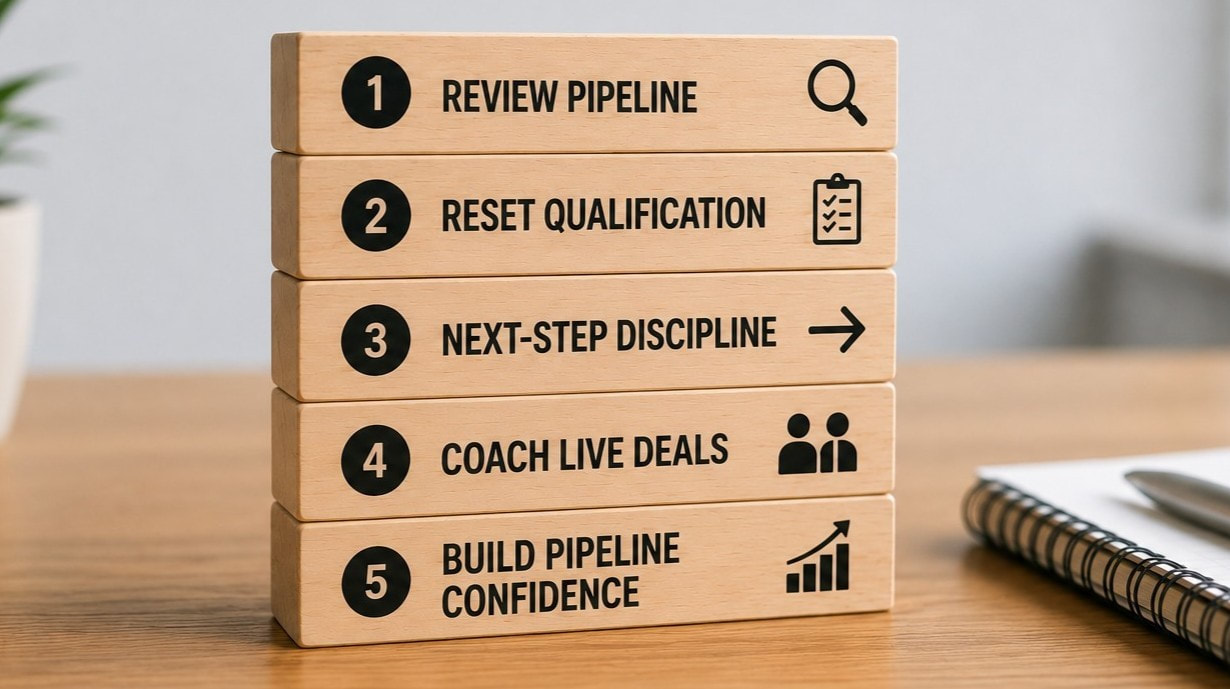
Just a week ago, many B2B sales teams were focused on closing business before 30 June. Now the pressure has changed. The start of FY27 brings renewed targets, updated budgets and fresh expectations. For many Australian businesses, July is a natural reset point. Sales plans are reviewed, revenue goals are refreshed, and teams begin the year with a renewed focus on growth. But while many organisations spend time setting targets, fewer spend enough time strengthening the sales disciplines that determine whether those targets are achieved. Last month, we explored how B2B sales teams can avoid unnecessary discounting during the EOFY rush. Now that the new financial year has begun, the focus shifts from protecting margin to strengthening the sales execution that creates more consistent commercial performance. The strongest sales teams do not rely on motivation alone. They rely on consistent execution. They qualify well, manage opportunities clearly, coach live deals, and build confidence in the pipeline before the quarter is under pressure. That is why the first 90 days of FY27 matter. They are not just the beginning of the year. They are an opportunity to reset the habits, standards and behaviours that shape commercial performance. Here are five practical sales disciplines that can help. 1. Review the Pipeline You Are Actually CarryingA healthy pipeline is not measured by the number of opportunities it contains. It is measured by the quality of those opportunities. Many sales teams begin the year with a pipeline that looks active, but not all opportunities carry the same commercial value. Some are progressing. Some are stalled. Others remain in the pipeline because no one has made the decision to remove them. This creates false confidence. If a pipeline contains too many low-probability opportunities, forecasts become less reliable and salespeople spend valuable time on deals that are unlikely to convert. Many pipelines also contain opportunities carried over from June. Rather than assuming they remain active, July is the ideal time to re-qualify those opportunities and decide whether they genuinely belong in the new financial year's forecast. At the start of FY27, sales leaders should ask:
Removing weak opportunities is not negative. It improves focus, strengthens pipeline visibility, and helps the team spend more time where there is genuine potential. 2. Reset Qualification Standards EarlyQualification discipline has a direct impact on sales productivity. When qualification is weak, teams spend too much time pursuing opportunities that were never likely to move forward. The result is longer sales cycles, weaker forecasts, and frustration for both salespeople and leaders. The start of the financial year is the right time to reset what a real opportunity looks like. Strong qualification is not about being difficult. It is about being clear. Does the customer have a genuine need? Is there a commercial reason to act? Is there authority to progress? Is the timing realistic? Is there enough value to justify the investment? Better qualification helps teams say “yes” to the right opportunities and “not yet” or “not suitable” to the wrong ones. Within the Q-RED™ Sales System, Qualification is the first stage for a reason. If the opportunity is not properly qualified, every later stage becomes harder to manage. 3. Strengthen Next-Step DisciplineMany opportunities do not stall because the customer has said no. They stall because the next step was never clear enough. A follow-up email is not always a next step. “Checking in next week” is rarely enough. A real next step should include a clear action, agreed ownership and a realistic timeframe. For example:
Clear next steps create movement. Unclear next steps create drift. This is especially important in B2B sales where decisions often involve multiple people, competing priorities and changing timelines. Within Q-RED™, this connects strongly to the Decision stage. The objective is not simply to keep following up. The objective is to create decision clarity so both the salesperson and customer understand what progress actually looks like. 4. Coach Live Opportunities, Not Just ActivitySales meetings often focus heavily on activity and numbers. How many calls were made? How many meetings were booked? What is closing this month? These are important questions, but they do not always improve the quality of the opportunity. Effective coaching goes deeper. It helps salespeople think through live deals, challenge assumptions, understand customer requirements, strengthen evidence and clarify the path to decision. Coaching is not simply telling people what to do. It is asking the right questions so they can improve their own judgement and apply better sales discipline in real situations. This is where training and coaching work best together. Sales training builds understanding. Sales coaching helps embed the behaviour through live opportunities. Without reinforcement, even good training can lose momentum. With consistent coaching, new disciplines are more likely to become part of how the team sells every day. 5. Measure Forecast Confidence, Not Just RevenueRevenue is important, but it is a lagging indicator. By the time revenue is missed, the issues that caused the gap often appeared much earlier in the pipeline. That is why sales leaders should measure the behaviours and signals that create forecast confidence. These may include:
When these areas improve, forecasting usually becomes clearer because the pipeline is based on better information. The objective is not to create more reports. It is to create better visibility. This is where the full Q-RED™ framework becomes valuable. Qualification improves deal quality. Requirements clarify the commercial problem. Evidence builds confidence. Decision discipline creates clearer movement through the pipeline. Sales leaders do not need perfect certainty. They need enough confidence to make better decisions about resources, priorities, coaching and growth. Building More Consistent Sales Performance in FY27The start of a new financial year is not just an opportunity to reset sales targets. It is an opportunity to reset the disciplines that determine whether those targets are achieved. Many businesses already have capable sales teams. The opportunity is not always to start again. It is often to create greater consistency in the way the team qualifies opportunities, progresses deals, coaches performance and manages the pipeline. The goal is rarely to change everything. More often, it is to introduce greater consistency into the way sales opportunities are qualified, progressed, coached and forecast. That consistency can reduce wasted effort, improve deal control, strengthen pipeline visibility and create greater confidence in the year ahead. This is where a structured sales system can make a significant difference. At Touchstone, we help B2B teams selling into SME markets strengthen sales execution through the structured, sequential Q-RED™ Sales System. Delivered through practical workplace training and reinforced with live-deal coaching, Q-RED™ helps teams improve qualification discipline, strengthen deal control, increase pipeline visibility and build greater forecast confidence. The objective is not simply to deliver training. It is to help sales teams develop disciplines that become part of the way they work every day. Explore Q-RED™ Foundations A practical starting point for B2B teams selling into SME markets Q-RED™ Foundations introduces your team to the structured, sequential Q-RED™ Sales System through practical training, discussion, role-play and live-deal application. It gives your team a common language and framework before deeper coaching embeds the behaviours in real opportunities. You can also explore Touchstone’s Sales Health Check, sales training, sales coaching, or learn more about the Q-RED™ Sales System. Structured Sales. Human Delivery. Stay Connected Monthly Sales InsightsReceive one practical sales insight each month to help your B2B team strengthen sales execution, improve pipeline quality and build forecast confidence. One email each month. Unsubscribe anytime. 
Every June, a familiar pattern emerges across Australian businesses. As the End of Financial Year approaches, sales teams feel increased pressure to close opportunities, budgets are reviewed, and conversations that may have drifted for months can suddenly become urgent. While this can create opportunities, it can also create risk. One of the most common mistakes sales teams make at EOFY is assuming that urgency automatically requires discounting. A prospect asks for a concession. A competitor is mentioned. The calendar is ticking towards June 30. And suddenly, margin becomes negotiable. The problem is that discounting rarely solves the real issue. In many cases, it simply masks weaknesses in qualification, value communication, or decision management that should have been addressed much earlier in the sales process. The strongest B2B sales teams do not protect margin by refusing every discount request. They protect margin by maintaining commercial discipline throughout the entire buying journey. This is where the Q-RED™ Sales System becomes particularly valuable. By strengthening qualification, understanding requirements, building evidence, and managing decisions effectively, sales teams can navigate EOFY pressure without turning their pipeline into a fire sale. Here are six practical ways to do exactly that. 1. Recognise the Difference Between Price Pressure and Buying IntentMany buyers ask for a discount automatically. It does not necessarily mean price is the real obstacle. In fact, some buyers ask for a discount simply because they expect the question to be part of the process. Others may be testing flexibility, confidence, urgency, or perceived value. Before discussing any pricing concession, it is important to understand what is actually preventing the deal from moving forward.
The earlier a team identifies the true barrier, the less likely they are to use discounting as a default response. Within the Q-RED™ framework, this starts with qualification. If the underlying concern remains unclear, any discussion about price is likely to happen too early. 2. Revisit the Cost of Doing NothingWhen price objections arise, many salespeople instinctively defend their solution. A more effective approach is to revisit the business problem. Every commercial decision carries two costs:
The second cost is often forgotten. What happens if the problem remains unresolved for another six months? What impact does it have on revenue, productivity, customer retention, efficiency, compliance, or growth? When buyers clearly understand the cost of delay, discussions naturally shift away from price and back towards outcomes. This is why the Requirements stage of Q-RED™ is so important. If the commercial impact has been fully explored and agreed, buyers are far less likely to reduce the conversation to a simple pricing discussion. 3. Strengthen the Evidence Before Discussing the InvestmentPrice pressure often reveals a different problem: The value has not been fully established. When buyers clearly believe they will receive a meaningful return on investment, pricing conversations become significantly easier. Before negotiating, ask yourself:
The Evidence pillar of the Q-RED™ Sales System exists for this exact reason. Evidence creates confidence. Confidence reduces perceived risk. And reduced risk typically lowers resistance to investment. If a buyer is focused solely on price, there is often an opportunity to strengthen the evidence before discussing any concession. 4. Trade Value – Don't Give Away MarginThere may be situations where flexibility is appropriate. However, one of the most damaging habits in B2B sales is giving away margin without receiving anything in return. A useful principle is simple: If you give something away, receive something in return. For example, a pricing adjustment might be linked to:
This protects commercial integrity while still creating flexibility for both parties. A practical response might be: If we were to adjust the investment, we would need to adjust another part of the arrangement as well. This reframes the conversation from discounting to commercial negotiation. The objective is not to win a price argument. The objective is to maintain a balanced commercial outcome. 5. Focus on Decision Momentum, Not Discount MomentumMany EOFY opportunities do not stall because of price. They stall because the path to a decision remains unclear. Additional stakeholders appear. Approvals are delayed. Competing priorities emerge. Timelines become uncertain. In these situations, a discount often becomes a distraction from the real issue. Instead of asking, "How much do we need to reduce the price?", ask:
The Decision pillar of Q-RED™ is designed to create this clarity. When stakeholders, timelines and next steps are understood early, there is far less pressure to introduce unnecessary concessions at the final stage. 6. Remember That Every Discount Creates a Future BenchmarkEOFY discounts can solve a short-term problem. They can also create a long-term one. Every concession establishes an expectation. The pricing agreed today often becomes the reference point for future negotiations. This is why sales leaders should evaluate discount requests carefully. Before reducing price, ask: Would we be comfortable offering this same arrangement again in six months? If the answer is no, it may be worth exploring alternative ways to create value. Strong businesses protect margin because margin funds future growth, capability, service delivery, and investment. Protecting margin is not about being inflexible. It is about being deliberate. Moving Beyond EOFY PressureEOFY will always create urgency. The challenge is ensuring that urgency improves decision-making rather than undermining commercial discipline. The most effective B2B sales teams do not rely on discounts to close business. Instead, they focus on:
That approach does not just improve profitability. It creates greater pipeline certainty, stronger forecasting, and more consistent sales performance. And that is exactly what the Q-RED™ Sales System is designed to support. If your team is experiencing increasing price pressure, stalled opportunities, or margin erosion, it may be worth reviewing where those challenges are occurring within your sales process. Because in most cases, the issue is not the discount request itself. It is what happened earlier in the opportunity that made the discount feel necessary. Explore the Q-RED™ 6-Week Sales Program A rapid impact program for SME sales teams The Q-RED™ 6-Week Sales Program is designed to strengthen qualification, improve value conversations, and create clearer decision control across your pipeline. Built on the Q-RED™ Sales System, it combines system-aligned training and live-deal coaching to improve deal quality, protect margin, and strengthen revenue confidence. You can also explore Touchstone’s sales training, sales coaching, or learn more about the Q-RED™ Sales System. Structured Sales. Human Delivery. Stay Connected Monthly Sales InsightsReceive one practical sales insight each month to help your B2B team strengthen sales execution, improve pipeline quality and build forecast confidence. One email each month. Unsubscribe anytime. |

Paul Mason
|

© Touchstone Training & Coaching 2026 · Western Sydney, NSW · Q-RED™ Sales System · Sales Training · Sales Coaching
Serving Western Sydney commercial & industrial hubs: Parramatta · Macquarie Park · Norwest · Penrith · Liverpool · Eastern Creek · Wetherill Park · Smithfield · Erskine Park · Prestons · Ingleburn